
The Hidden Cost of PCI Compliance for Healthcare Organizations
A new white paper on why PCI compliance in healthcare should be treated as a continuous visibility and governance discipline, not a once-a-year checkbox exercise.
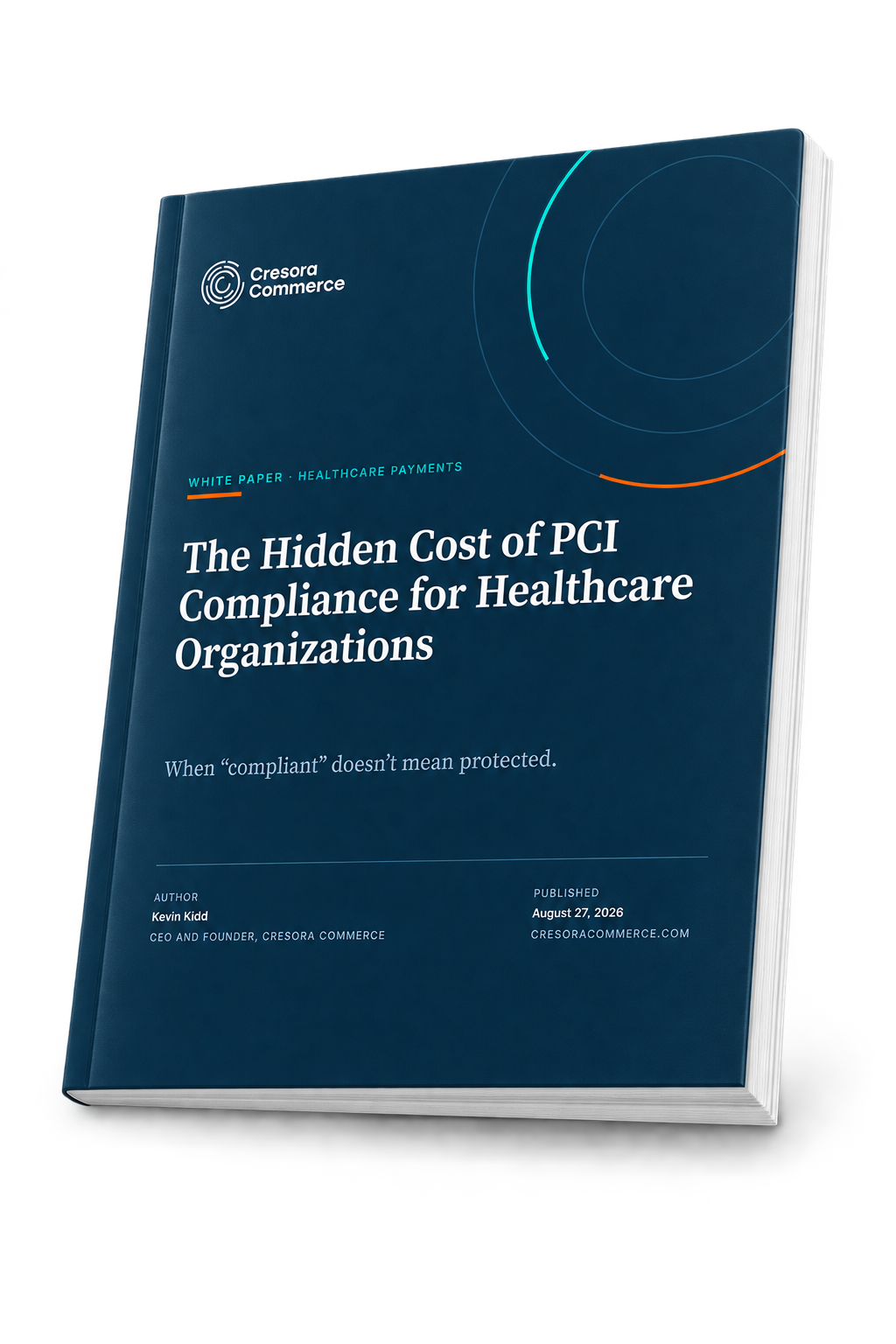
Downloadable white paper
Open the full PDF
Read the complete white paper with the full framework, diagnostic questions, and recommendations.
Open white paper PDFOverview
Healthcare organizations often treat PCI compliance like an annual milestone. This white paper argues that the bigger issue is not whether an assessment was completed, but whether leaders still have current visibility into the systems, vendors, devices, and workflows that handle payment data.
Core idea
PCI compliance is a continuous operating responsibility, not a once-a-year event. Payment environments change constantly through new software, updated gateways, new locations, device replacements, outsourced collections, and changing patient payment channels. Those changes can quietly alter scope and increase exposure.
What the paper covers
1. Compliance is a continuous state
The paper explains why payment infrastructure deserves the same ongoing attention healthcare organizations already give to HIPAA and broader security governance.
2. The misconception of “we are PCI compliant”
Individual vendors may each be compliant on their own, while the combined environment still introduces risk through integrations, handoffs, and weak oversight.
3. Seven questions leaders should be able to answer
The diagnostic section pushes teams to examine inventory, oversight, data flow, third-party access, scope changes, and ownership across the payment estate.
4. The economics of hidden exposure
The paper reframes PCI spend around whether it buys demonstrable assurance or simply preserves the ability to say an assessment happened.
5. Why limited visibility creates twice the risk
Poor visibility increases the chance that gaps go unnoticed and also slows response when an incident or disruption occurs.
6. A practical path forward
Cresora’s point of view is that modern payment infrastructure should reduce complexity, centralize reporting, improve audit readiness, and make compliance easier to sustain.
Why this matters
The paper is especially relevant for health systems, provider groups, healthcare technology companies, and revenue cycle leaders managing fragmented payment environments across locations, vendors, and channels.
Download the full white paper
Use the button above to open the full PDF and review the complete framework, examples, and next-step recommendations.
See It In Action
Turn these ideas into revenue, speed, and control
Schedule a personalized walkthrough to see how Cresora applies these concepts to your specific environment.
Schedule a Demo